
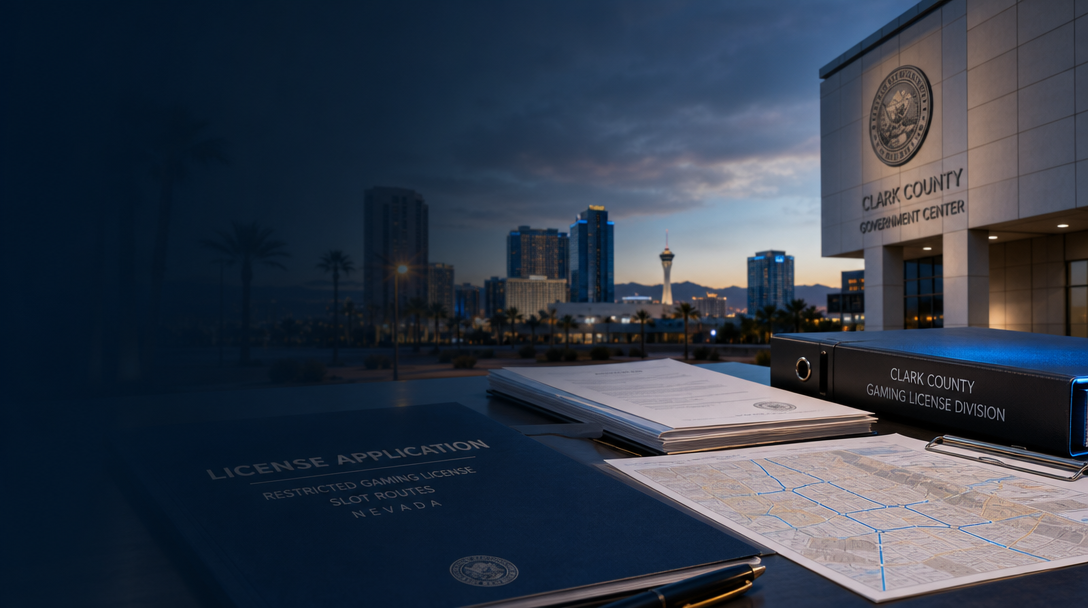
Restricted gaming license for slot routes in Nevada is a major topic for taverns, bars, restaurants, convenience stores, truck stops, grocery stores, and other businesses that want slot machines as part of a larger business model. In Nevada, restricted gaming generally means 15 or fewer slot machines at a location where slot play is incidental to the main business.
For business owners in Las Vegas, NV | Henderson, NV | Summerlin, slot route licensing can involve the Nevada Gaming Control Board, Nevada Gaming Commission, local business licensing, privileged license review, zoning, liquor licensing, fingerprints, financial investigation, source-of-funds records, site approval, and ongoing reporting duties.
At Kaizen Strategies, we help clients with gaming licensing, business licensing, privileged and liquor licensing, government representation, special use permits, zoning variances, and land entitlement across Las Vegas, NV | Henderson, NV | Summerlin.
Table of Contents
- What a Restricted Gaming License for Slot Routes in Nevada Means
- What Is a Slot Route Operator?
- Restricted Gaming vs Nonrestricted Gaming
- Who Can Hold a Restricted Gaming License?
- How Slot Route Agreements Usually Work
- The 15-Slot Machine Limit
- State Gaming Review for Slot Routes
- Local Licensing for Restricted Gaming
- Liquor Licensing and Slot Routes
- Location, Zoning, and Site Review
- Records Applicants Should Prepare
- Common Mistakes With Slot Route Licensing
- How Kaizen Strategies Helps
- FAQs
- Sources
What a Restricted Gaming License for Slot Routes in Nevada Means
A restricted gaming license for slot routes in Nevada usually applies to a location with 15 or fewer slot machines where gaming is not the main business. The main business may be a tavern, bar, restaurant, convenience store, grocery store, truck stop, or similar host operation.
Here is why this matters. Nevada law does not treat slot machines as a simple add-on. Even a small number of machines can trigger gaming review, local license review, background checks, financial review, and site approval.
A restricted gaming setup may involve:
- The host business
- A licensed slot route operator
- The Nevada Gaming Control Board
- The Nevada Gaming Commission
- A city or county licensing office
- Local police or background investigators
- Planning, zoning, fire, or building staff
- Liquor licensing staff, when alcohol is sold
- A landlord or property owner
The real question is not only whether the business wants slot machines. The better question is whether the site, owner, operator, business model, and records are ready for state and local review.
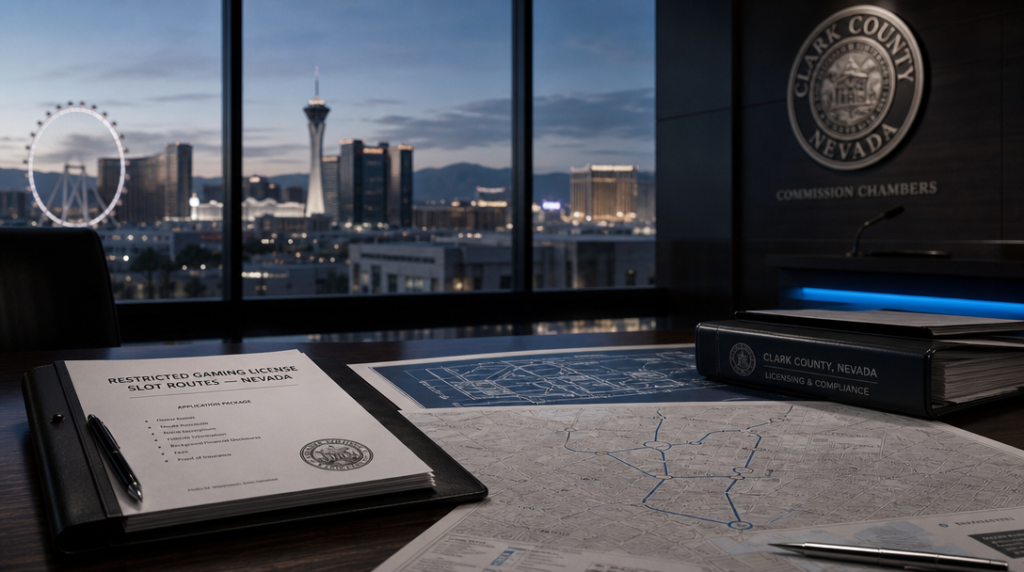
For businesses in Las Vegas, NV | Henderson, NV | Summerlin, the local agency depends on the exact property address. A Las Vegas mailing address may fall under City of Las Vegas, Clark County, or another local agency based on the parcel.
What Is a Slot Route Operator?
A slot route operator is a licensed gaming company that places and operates slot machines at multiple approved host locations. The route operator may own or control the machines, maintain them, handle accounting duties, and work with the host location under an agreement.
A slot route operator may work with:
- Taverns
- Bars
- Restaurants
- Convenience stores
- Grocery stores
- Truck stops
- Liquor stores
- Other approved locations
A route arrangement can be useful for a business that wants machines but does not want to operate its own gaming system. The route operator may already have gaming operations knowledge, service staff, machine access, reporting systems, and gaming records experience.
Now here’s the thing: a route agreement does not erase licensing duties. The host location still needs the right approvals. The route operator must also hold the right gaming approval. The site must qualify. The agreement must fit Nevada law and local rules.
For Las Vegas, NV | Henderson, NV | Summerlin, the route model should be reviewed before signing a lease, remodeling the space, buying furniture, applying for liquor approval, or placing machines.
Restricted Gaming vs Nonrestricted Gaming
A restricted gaming license for slot routes in Nevada is different from a nonrestricted gaming license. This difference affects machine count, allowed gaming activity, license forms, investigation scope, fees, and business planning.
Restricted gaming generally means:
- 15 or fewer slot machines
- No table games
- No race book
- No sports pool
- Slot play is incidental to the main business
- The location is not being operated as a casino-style business
Nonrestricted gaming may apply when the business has:
- 16 or more slot machines
- Table games
- A race book or sports pool
- Larger casino-style gaming operations
- Gaming as a main business activity
What this means: the number of machines and the business model matter. A tavern with 15 machines can look very different from a business planning 16 machines, table games, or sportsbook activity.
The catch is that owners sometimes design the space before checking the licensing effect. If the plan changes from 15 machines to 16 or more, the licensing path can change. That can affect timing and cost.
Bottom line: slot count is not just a layout choice. It can decide the license category.
Who Can Hold a Restricted Gaming License?
Nevada law says a license to operate 15 or fewer slot machines at a location where slot play is incidental to the main business may be granted only to the operator of the main business or to a licensed slot machine route operator.
That means a restricted gaming setup often falls into one of two paths:
- The host business applies for the restricted gaming license.
- A licensed slot route operator applies or operates at the approved host location under the right structure.
A host business may include a tavern, bar, restaurant, store, or other business where gaming is not the main activity. A slot route operator may work across many locations.
The right path depends on:
- Who owns or controls the machines
- Who operates the main business
- Who receives gaming revenue
- Who has the gaming license
- Who maintains the machines
- Who handles records
- Who has control over gaming activity
- What the agreement says
- What the state and local agencies require
For business owners in Las Vegas, NV | Henderson, NV | Summerlin, this should be reviewed before signing any route contract. A poorly written agreement can create licensing confusion.
How Slot Route Agreements Usually Work
A slot route agreement is the contract between the route operator and the host business. The agreement may define who supplies the machines, how money is split, who handles repairs, who tracks machine revenue, who handles gaming reports, and what happens if a license issue arises.
A route agreement may cover:
- Machine count
- Machine ownership
- Placement location
- Revenue split
- Service duties
- Repair duties
- Accounting duties
- Cash handling
- Reporting duties
- Term and renewal
- Termination rights
- License duties
- Loss of license events
- Insurance
- Access to the property
- Employee duties
- Rules for moving or replacing machines
Here’s what matters: the agreement should match the licensing plan. If the contract gives control rights to someone who has not been disclosed or reviewed, that can create problems. If the agreement conflicts with the lease, local license, or state filing, agencies may ask questions.
For taverns and bars, the agreement should also be reviewed with liquor licensing in mind. Local agencies may look at both the liquor license and restricted gaming approval when deciding whether the business is suitable.
The 15-Slot Machine Limit
The 15-slot machine limit is central to a restricted gaming license for slot routes in Nevada. A restricted operation generally means no more than 15 slot machines and no other game, race book, or sports pool at a location where slot machines are incidental to the main business.
This limit affects:
- License type
- Application forms
- Local review
- Business model
- Floor plan
- Machine placement
- Revenue planning
- Route agreement terms
- Whether nonrestricted review may apply
If a business wants more than 15 machines, it should review nonrestricted gaming rules before moving forward. If a business wants table games, sportsbook activity, or race book activity, restricted gaming is not the right fit.
What this means: keep the plan clear from the start. Know how many machines are proposed, where they will sit, who will operate them, and how they fit the main business.
For Las Vegas, NV | Henderson, NV | Summerlin, local agencies may also review whether the slot play is incidental to the main business. A tavern or store should not treat restricted gaming as a workaround for opening a small casino.
State Gaming Review for Slot Routes
The Nevada Gaming Control Board reviews restricted gaming applications and publishes a restricted gaming license checklist. The checklist instructs applicants to complete and return the checklist with the application and arrange the application in the listed order.
State review may include:
- Restricted gaming license application
- Individual applications
- Entity records
- Ownership records
- Personal history records
- Fingerprints
- Background review
- Financial records
- Source-of-funds records
- Route operator information
- Location information
- Lease or property records
- Machine count
- Floor plan
- Investigation fees
- Board and Commission review
The Nevada Gaming Control Board’s forms page is the place to check current forms and instructions before filing.
For a slot route operator, state review can also look at the operator’s broader business, route locations, management, finances, suitability, and ability to follow gaming rules.
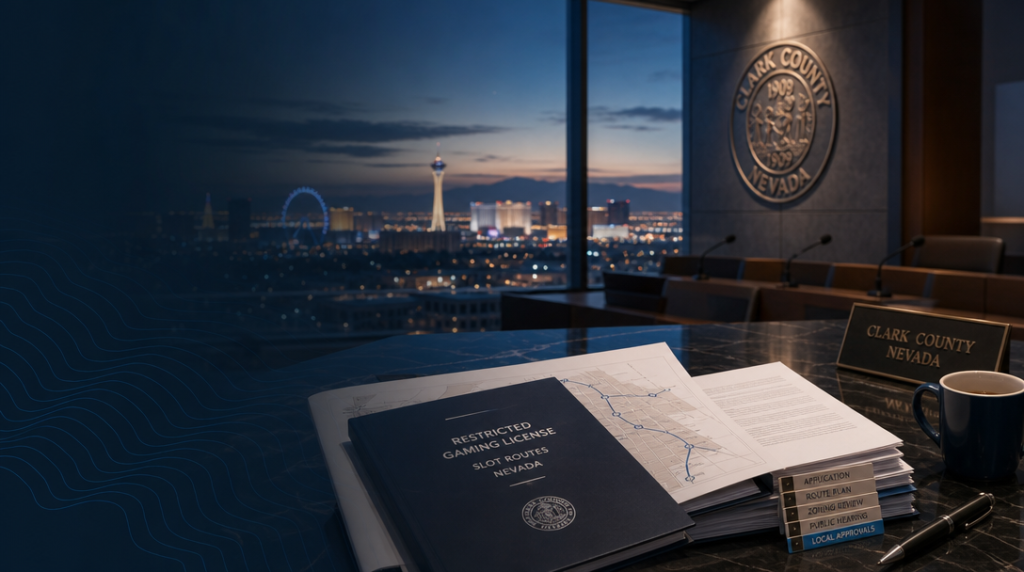
Next steps should begin with the right form packet. Old forms, missing signatures, or incomplete exhibits can cause avoidable delays.
Local Licensing for Restricted Gaming
State gaming approval does not replace local licensing. A restricted gaming license for slot routes in Nevada also requires local review by the city or county where the business is located.
For Las Vegas, NV | Henderson, NV | Summerlin, the local agency may be:
- City of Las Vegas
- Clark County
- City of Henderson
- City of North Las Vegas
- Another local agency
Local review may include:
- General business license
- Privileged gaming license
- Personal history forms
- Background review
- Financial investigation
- Fingerprints
- Business location review
- Zoning review
- Fire review
- Building review
- Health review, when food is served
- Liquor license review, when alcohol is sold
- Local fees
- Board or hearing review
Clark County states that liquor and gaming business licenses are privileged licenses, and that applicants must be found suitable before a license is issued. Clark County also says suitability is determined through criminal background and financial investigations completed by the Department and the Las Vegas Metropolitan Police Department.
What this means: local licensing can take time. Do not assume state filing alone will allow machines to be placed.
Liquor Licensing and Slot Routes
Bars and taverns often combine liquor licensing with restricted gaming. This makes the process more detailed because the business may need both a liquor license and a gaming approval.
Liquor and gaming review may involve:
- Business license review
- Privileged liquor application
- Privileged gaming application
- Owner suitability
- Manager suitability
- Source-of-funds review
- Criminal background review
- Financial investigation
- Site inspection
- Zoning review
- Fire review
- Health review
- Public hearing or board review
- Renewal duties
A tavern in Las Vegas, NV | Henderson, NV | Summerlin should coordinate liquor and gaming steps early. A delay in liquor licensing can affect the opening plan. A gaming issue can affect the tavern model. A zoning issue can affect both.
Kaizen Strategies helps with privileged and liquor licensing and gaming licensing so those tracks can be reviewed together.
Now here’s the thing: a liquor license does not automatically allow slot machines. Slot machines need separate gaming review.
Location, Zoning, and Site Review
A restricted gaming project depends heavily on the site. Even if the owner and route operator are ready, the location may create issues.
A site review may cover:
- Address and local jurisdiction
- Zoning district
- Allowed use
- Prior use
- Distance rules
- Parking
- Floor plan
- Machine placement
- Customer access
- Restroom access
- Food or alcohol service
- Fire access
- Building permits
- Tenant improvements
- Signage
- Landlord consent
- Lease restrictions
For businesses in Las Vegas, NV | Henderson, NV | Summerlin, site review should happen before signing a lease. A landlord may be willing to lease the space, but the local agency may not allow the proposed use or may require extra approvals.
Some projects may need special use permits, zoning variances, or land entitlement.
The real question is whether the property can support the business model. If the site has zoning, parking, fire, buildout, or distance issues, the slot route approval can slow down.
Records Applicants Should Prepare
A clean file can reduce delays with a restricted gaming license for slot routes in Nevada. The exact records depend on whether the applicant is the host business, the slot route operator, or both.
Common records may include:
- Legal business name
- DBA or trade name
- Nevada State Business License
- Secretary of State records
- Local business license records
- Ownership chart
- Operating agreement
- Articles of organization
- Manager or officer list
- EIN letter
- Nevada tax records
- Lease or deed
- Landlord consent
- Floor plan
- Machine layout
- Slot route agreement
- Source-of-funds records
- Bank statements
- Loan records
- Investor records
- Personal history records
- Fingerprints
- Liquor license records, when applicable
- Health permit records, when applicable
- Fire or building records, when applicable
For route operators, records may also include:
- Route operation history
- Existing licensed locations
- Machine ownership records
- Service records
- Accounting systems
- Internal controls
- Management records
- Employee records tied to gaming duties
Bottom line: records should match across every filing. The business name, address, suite number, owners, managers, and business activity should line up across state records, local forms, lease papers, route agreements, and tax records.
Common Mistakes With Slot Route Licensing
Many owners run into delays with a restricted gaming license for slot routes in Nevada because they treat the process like a basic business license. Restricted gaming is more detailed.
Mistake 1: Assuming 15 Machines Are Always Allowed
The 15-machine limit is only one part of restricted gaming. The location, business model, local rules, and suitability review still matter.
Mistake 2: Signing a Route Agreement Too Soon
A route agreement should be reviewed with the license path, lease, liquor license, and local rules in mind.
Mistake 3: Ignoring Local Privileged Licensing
State gaming approval does not replace city or county privileged license approval.
Mistake 4: Choosing the Wrong Local Agency
A Las Vegas mailing address does not always mean City of Las Vegas jurisdiction. Confirm the exact local agency by address.
Mistake 5: Weak Source-of-Funds Records
Agencies may review where the money came from, who funded the project, and whether anyone else has control rights.
Mistake 6: Missing Owners, Investors, or Control Persons
People with ownership, profit rights, loan rights, voting rights, or operating control may need disclosure or review.
Mistake 7: Forgetting Liquor License Timing
For taverns and bars, liquor and gaming often need to move together. A problem with one can delay the other.
Mistake 8: Starting Buildout Before Zoning Review
A site may need local approvals before machines can be approved or placed.
Mistake 9: Using Old Forms
Nevada Gaming Control Board and local agency forms can change. Use current forms before filing.
Mistake 10: Waiting Too Long to Respond
Agency requests for records should be tracked and answered quickly with complete documents.
How Kaizen Strategies Helps
Kaizen Strategies is a full-service business licensing and government advocacy firm serving Las Vegas, NV | Henderson, NV | Summerlin. Our team includes former high-ranking government officials, attorneys, and licensing professionals with more than 20 years of business, community, and government relations experience.
We help clients understand the restricted gaming license for slot routes in Nevada process and plan the state, local, site, liquor, ownership, and route operator steps before problems arise.
Our services include:
- Gaming licensing
- Business licensing
- Privileged and liquor licensing
- Government representation
- Business formation
- Secretary of State filings
- Special use permits
- Zoning variances
- Land entitlement
- Lobbying
If you are opening a tavern, adding machines to an existing location, signing with a route operator, buying a business with slot machines, changing ownership, or responding to agency questions, review the license path before moving forward.
Call (725) 247-6828 or visit https://kaizennv.com/contact-us to schedule an appointment.
FAQs
1. What is a restricted gaming license for slot routes in Nevada?
A restricted gaming license generally applies to 15 or fewer slot machines at a location where slot play is incidental to the main business, with no other game, race book, or sports pool.
2. What is a slot route operator?
A slot route operator is a licensed gaming company that places and operates slot machines at approved host locations, often under route agreements with bars, taverns, stores, restaurants, or other businesses.
3. Can any business add 15 slot machines?
No. The business still needs the right state and local approvals, site review, suitability review, and license structure. The 15-machine limit does not guarantee approval.
4. Who can hold the license for 15 or fewer slot machines?
Nevada law says the license may be granted only to the operator of the main business or to a licensed operator of a slot machine route.
5. Does a liquor license allow a tavern to add slot machines?
No. A liquor license does not automatically approve gaming. Taverns and bars usually need separate gaming approval, and local privileged licensing may review both liquor and gaming issues.
6. Can a local license delay a slot route project?
Yes. State gaming review and local licensing should be coordinated. Local business licensing, privileged gaming, liquor licensing, zoning, inspections, and hearings can all affect timing.
7. Who can help with a restricted gaming license for slot routes in Nevada?
Kaizen Strategies helps businesses in Las Vegas, NV | Henderson, NV | Summerlin with gaming licensing, slot route licensing questions, business licensing, privileged liquor licensing, zoning, permits, and government agency steps. Call (725) 247-6828 or visit https://kaizennv.com/contact-us.
Sources
- NRS Chapter 463, Licensing and Control of Gaming, Nevada Legislature, accessed July 16, 2026.
- Restricted Gaming License Checklist, Nevada Gaming Control Board, current PDF accessed July 16, 2026.
- Forms and Applications, Nevada Gaming Control Board, updated July 2026, accessed July 16, 2026.
- Gaming Statutes and Regulations, Nevada Gaming Control Board, updated July 2026, accessed July 16, 2026.
- Regulation 4, Applications: Procedure, Nevada Gaming Control Board, current PDF accessed July 16, 2026.
- Application and Investigative Fee Schedule, Nevada Gaming Control Board, revised January 2026, accessed July 16, 2026.
- Liquor and Gaming, Clark County Department of Business License, accessed July 16, 2026.
- Privileged Business License Application Forms, Clark County Department of Business License, accessed July 16, 2026.
- Restricted Gaming Checklist, City of Las Vegas Business Licensing, accessed July 16, 2026.
- Slot Route Operator Checklist, City of Las Vegas Business Licensing, accessed July 16, 2026.

