


Nonrestricted vs restricted gaming licenses in Nevada is one of the first issues business owners should understand before opening, buying, or expanding a gaming-related business. The license type affects the application, investigation, local approval path, taxes, fees, operating limits, and who may need to qualify.
For business owners in Las Vegas, NV | Henderson, NV | Summerlin, this difference matters before you sign a lease, buy equipment, hire staff, plan a casino floor, add slot machines, or build a tavern gaming model. A small bar with slot machines does not follow the same path as a casino, sportsbook, resort gaming floor, or larger gaming operation.
At Kaizen Strategies, we help clients with gaming licensing, business licensing, privileged and liquor licensing, government representation, special use permits, zoning variances, and related licensing steps across Las Vegas, NV | Henderson, NV | Summerlin.
Table of Contents
- What Restricted Gaming Means in Nevada
- What Nonrestricted Gaming Means in Nevada
- Restricted vs Nonrestricted Gaming License: Main Differences
- Slot Machine Limits
- Table Games and Casino Games
- Business Model Differences
- Application and Investigation Differences
- Local Licensing Differences
- Zoning and Location Review
- Fees, Taxes, and Ongoing Duties
- Which License Type Fits Your Business?
- Mistakes to Avoid
- How Kaizen Strategies Helps
- FAQs
- Sources
What Restricted Gaming Means in Nevada
Nonrestricted vs restricted gaming licenses in Nevada starts with the restricted license. A restricted gaming license is generally tied to a smaller gaming setup. Nevada law refers to a license to operate 15 or fewer slot machines at an establishment where slot machine play is incidental to the main business conducted at that establishment.
That means the business is not usually a full casino. The main business may be a bar, tavern, restaurant, grocery store, convenience store, or similar place where slot machines are added as part of the customer experience.
Here is why this matters. Restricted gaming is based on the idea that gaming is not the main business. The gaming activity supports the main business, but the location is not being operated as a full casino floor.
A restricted gaming license may apply to businesses such as:
- Taverns
- Bars
- Restaurants
- Convenience stores
- Grocery stores
- Small hospitality venues
- Local businesses with no more than 15 slot machines

For businesses in Las Vegas, NV | Henderson, NV | Summerlin, restricted gaming can still require state review, local licensing, site approval, background checks, financial review, and suitability review. Restricted does not mean automatic. It only means the gaming scope is limited.
What Nonrestricted Gaming Means in Nevada
A nonrestricted gaming license covers larger gaming activity. The Nevada Gaming Control Board describes a nonrestricted gaming license as one issued for games or tables only, 16 or more slot machines only, or games or tables together with slot machines.
This license type may apply to:
- Casinos
- Resort casinos
- Larger gaming floors
- Locations with 16 or more slot machines
- Locations with table games
- Some sportsbook or race book operations
- Certain larger entertainment or hospitality gaming projects
The real question is what the business will offer. If the business has table games, a larger slot count, or a casino-style gaming model, the nonrestricted path may apply.
A nonrestricted license can bring more review because the business may involve more gaming activity, more controls, more money movement, more employees, more owners, and more public exposure. That can mean more forms, more records, more suitability review, and more follow-up.
For a project in Las Vegas, NV | Henderson, NV | Summerlin, a nonrestricted path should be reviewed early with the site, entity structure, funding, local agency, and buildout plan.
Restricted vs Nonrestricted Gaming License: Main Differences
The difference between nonrestricted vs restricted gaming licenses in Nevada often comes down to the amount and type of gaming. Still, the full picture includes more than slot count.
Here is a simple comparison:
| Issue | Restricted Gaming License | Nonrestricted Gaming License |
|---|---|---|
| Slot machines | Usually 15 or fewer | 16 or more may trigger nonrestricted status |
| Table games | Not part of the restricted model | May include table games |
| Main business | Gaming is incidental to the main business | Gaming may be the main business |
| Common locations | Taverns, bars, restaurants, stores | Casinos, resorts, large gaming floors |
| Review scope | Suitability and site review still apply | Usually broader review |
| Local licensing | Often required | Often required |
| Records | Personal, financial, entity, and site records | More records may be needed |
| Ongoing duties | Slot-related taxes, local duties, renewals | Broader taxes, fees, controls, renewals |
Now here’s the thing: the line is not always as simple as counting machines. A business model, location, ownership group, local rules, and gaming activity can all affect the license path.
Before filing, owners should confirm the license type with the right state and local framework.
Slot Machine Limits
Slot count is one of the clearest differences between restricted and nonrestricted gaming.
A restricted license is generally tied to 15 or fewer slot machines. Nevada law refers to a license to operate 15 or fewer slot machines where slot play is incidental to the main business.
A nonrestricted license may apply when the business operates 16 or more slot machines. The Nevada Gaming Control Board also lists nonrestricted gaming as applying to 16 or more slot machines only, or games/tables together with slot machines.
What this means: adding one more machine can change the license path. A business with 15 machines may be in restricted territory. A business with 16 machines may move into nonrestricted review.
For businesses in Las Vegas, NV | Henderson, NV | Summerlin, this can affect the budget, application, investigation, operating plan, local approval path, and timing. Do not add machines without reviewing the license impact first.
Table Games and Casino Games
Table games are another major dividing line in nonrestricted vs restricted gaming licenses in Nevada.
Restricted gaming is generally tied to slot machines only. If the business plans to offer table games, card games, roulette, craps, or other casino-style games, the nonrestricted path may apply.
This matters because table games can require more controls, more staffing, more compliance duties, more surveillance planning, and broader agency review. The business may also need more detailed internal procedures, financial controls, and employee approvals.
A business owner should ask:
- Will the location have table games?
- Will gaming be the main draw?
- Will the business have a casino floor?
- Will the site need surveillance systems?
- Will there be cage activity?
- Will employees need gaming registration or work cards?
- Will the local agency require a board appearance?
Bottom line: if table games are part of the plan, do not assume a restricted license will work.
Business Model Differences
The business model is a major part of the license decision.
A restricted gaming location usually has a non-gaming main business. The slot machines support the business, but the location is still mainly a tavern, bar, restaurant, store, or similar operation.
A nonrestricted gaming location may have gaming as a main business activity. A casino, resort casino, or larger gaming venue may be built around the gaming floor.
The business model affects:
- Licensing forms
- Local review
- Suitability review
- Financial disclosures
- Source-of-funds records
- Site layout
- Floor plans
- Employee needs
- Surveillance needs
- Tax and fee duties
- Agency questions
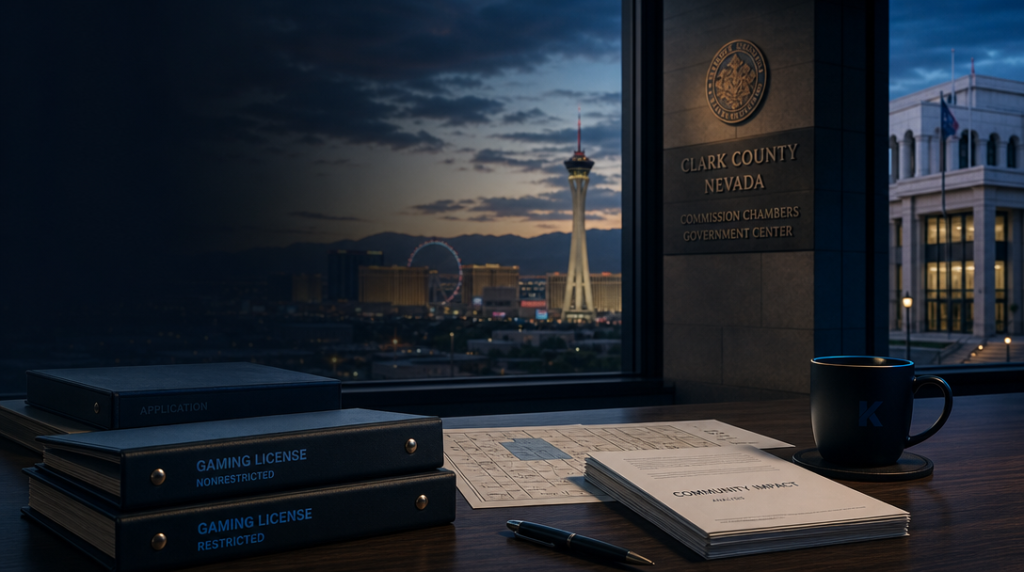
For Las Vegas, NV | Henderson, NV | Summerlin, this difference can also affect land use. A tavern with restricted gaming may have different local planning concerns than a large gaming venue. If a site needs land use help, Kaizen Strategies can help with special use permits, zoning variances, and land entitlement.
Application and Investigation Differences
Both restricted and nonrestricted gaming licenses require careful review. The difference is often the depth and scope of the review.
A restricted gaming application may still require:
- Individual disclosures
- Entity disclosures
- Background review
- Fingerprinting
- Financial records
- Source-of-funds proof
- Lease or site records
- Local business licensing
- Local privileged license review
- Slot machine details
A nonrestricted gaming application may require more records, including:
- Individual gaming license forms
- Entity applications
- Ownership charts
- Pre-opening cash information
- First-year cash flow information
- More detailed financial schedules
- Internal controls
- Management records
- Gaming floor details
- Employee planning
- Local agency materials
- Suitability filings for more people
The Nevada Gaming Control Board’s nonrestricted license checklist lists forms that may include Form 1 for individual applicants, Form 1A for a preliminary finding of suitability, Form 2 for entity approval, and Form 6 for pre-opening cash and first-year cash flow when the business entity seeks initial licensing.
Here’s what matters: the more people, entities, investors, lenders, and gaming activity involved, the more detailed the review may be.
Local Licensing Differences
State approval is not the only layer. Local licensing can apply to both restricted and nonrestricted gaming.
For businesses in Las Vegas, NV | Henderson, NV | Summerlin, the local agency depends on the exact property address. A business may fall under Clark County, the City of Las Vegas, the City of Henderson, or another local body.
Local licensing may include:
- Business license application
- Privileged license packet
- Background review
- Police review
- Fingerprints
- Financial review
- Site inspection
- Zoning review
- Fire or building review
- Board or hearing review
- Local fees and renewals
Clark County treats liquor and gaming business licenses as privileged licenses. Applicants must be found suitable before issuance, and the county describes suitability as tied to criminal background and financial investigations.
The catch is that local review can delay opening even when the state process is moving. State and local steps should be planned together.
Kaizen Strategies helps with business licensing and government representation for business owners dealing with agency review.
Zoning and Location Review
Location can decide whether a gaming plan works. A property may look right for traffic, parking, lease cost, or customer access, but still create licensing or zoning issues.
For restricted gaming, the site should support the main business and the proposed slot machines. The local agency may review the layout, parking, nearby uses, alcohol status, and whether gaming fits the property.
For nonrestricted gaming, the site review can be broader. A casino or larger gaming floor may raise more land use, zoning, site plan, traffic, parking, safety, signage, and public meeting concerns.
Location review may include:
- Zoning district
- Prior business use
- Prior gaming use
- Parking
- Floor plan
- Landlord consent
- Nearby protected uses
- Business license history
- Occupancy
- Building permits
- Fire review
- Signage
What this means: do not wait until after filing to check the site. If the site has a zoning issue, the project may need a permit, variance, or land entitlement process before the gaming license can move forward.
For Las Vegas, NV | Henderson, NV | Summerlin, this step should happen before signing a lease whenever possible.
Fees, Taxes, and Ongoing Duties
The cost structure can differ between restricted and nonrestricted gaming.
Restricted gaming may involve state application fees, investigation costs, local license fees, annual slot machine taxes, quarterly slot machine fees, and renewal duties.
Nonrestricted gaming may involve state application fees, investigation deposits, annual slot machine taxes, quarterly slot machine fees, annual game fees, quarterly game fees, monthly percentage fees based on gross gaming revenue, local license fees, and more operating controls.
The Nevada Gaming Control Board’s Tax and License Division lists different fee categories for restricted and nonrestricted licensees. The division also collects gaming taxes, fees, penalties, interest, and fines and issues gaming licenses approved by the Nevada Gaming Commission.
Next steps should include a cost review before filing. The fee due at submission is not always the full cost. Investigation costs, local fees, taxes, renewals, and records work should also be planned.
Which License Type Fits Your Business?
Choosing between nonrestricted vs restricted gaming licenses in Nevada starts with the business plan.
Ask these questions:
How many slot machines will the business operate?
If the number is 15 or fewer, restricted gaming may be possible. If the number is 16 or more, nonrestricted gaming may apply.
Will the business offer table games?
If yes, the nonrestricted path may apply.
Is gaming the main business?
If gaming is incidental to another main business, restricted gaming may fit. If gaming is the main business, nonrestricted gaming may fit.
Is the site ready?
The property must support the proposed use. Review zoning, parking, floor plan, landlord consent, and local license rules.
Who owns and controls the business?
Owners, managers, members, officers, directors, shareholders, lenders, investors, and control persons may need review.
Is alcohol part of the model?
If alcohol will be served, review gaming with privileged and liquor licensing at the same time.
What local agency controls the address?
For Las Vegas, NV | Henderson, NV | Summerlin, the local agency depends on the property address. Local review should be mapped early.
The right license type is the one that matches the gaming activity, site, ownership group, and local approval path.
Mistakes to Avoid
Many applicants run into trouble because they make assumptions about nonrestricted vs restricted gaming licenses in Nevada too early.
Assuming 15 Machines Always Means Easy Approval
A restricted license still requires review. The owner, site, funds, local license, and business model all matter.
Planning for 16 Machines Without Reviewing the Impact
Moving from 15 to 16 slot machines can change the license path. That can affect forms, costs, review, taxes, and timing.
Adding Table Games Without Planning
Table games can shift the project into a nonrestricted path with more review and operating duties.
Signing a Lease Before Site Review
A property may not support the proposed gaming use. Review zoning and local license rules before signing.
Ignoring Local Agencies
State approval does not replace local business licensing or privileged license approval.
Filing With Missing Records
Personal history records, source-of-funds proof, entity records, and site documents should be ready before filing.
Waiting Too Long to Review Liquor Licensing
Many gaming locations also serve alcohol. If liquor is part of the plan, review both license tracks early.
Using Old Forms or Fee Schedules
Gaming forms and fee schedules can change. Use current Nevada Gaming Control Board materials before filing.
How Kaizen Strategies Helps
Kaizen Strategies is a full-service business licensing and government advocacy firm serving Las Vegas, NV | Henderson, NV | Summerlin. Our team includes former high-ranking government officials, attorneys, and licensing professionals with more than 20 years of business, community, and government relations experience.
We help business owners compare nonrestricted vs restricted gaming licenses in Nevada and decide which path fits the project.
Our services include:
- Gaming licensing
- Business licensing
- Privileged and liquor licensing
- Government representation
- Special use permits
- Zoning variances
- Land entitlement
- Secretary of State filings
- Business formation
- Lobbying
If you are planning a gaming business, review the license type before you file, sign a lease, buy machines, plan table games, or set an opening date.
Call (725) 247-6828 or visit https://kaizennv.com/contact-us to schedule an appointment.
FAQs
1. What is the difference between restricted and nonrestricted gaming licenses in Nevada?
A restricted gaming license is generally tied to 15 or fewer slot machines where slot play is incidental to the main business. A nonrestricted gaming license may apply to 16 or more slot machines, table games, or larger casino-style gaming activity.
2. Can a restricted gaming license include table games?
Usually no. Restricted gaming is generally tied to slot machines only. If the business plans to offer table games, the nonrestricted license path may apply.
3. What happens if I want more than 15 slot machines?
Operating 16 or more slot machines may move the business into a nonrestricted gaming license path. That can affect forms, review, fees, taxes, local licensing, and timing.
4. Is a restricted gaming license easier to get?
A restricted gaming license may involve a smaller gaming scope than a nonrestricted license, but it still requires state and local review, suitability review, financial records, site approval, and complete forms.
5. Do both license types need local approval?
Often, yes. Businesses in Las Vegas, NV | Henderson, NV | Summerlin may need local business licensing or privileged licensing based on the property address and business model.
6. Can a tavern get a nonrestricted gaming license?
It depends on the business model, slot count, games offered, location, and local rules. A tavern with 15 or fewer slot machines may fit a restricted path, while a larger gaming plan may require nonrestricted review.
7. Who can help compare nonrestricted vs restricted gaming licenses in Nevada?
Kaizen Strategies helps business owners in Las Vegas, NV | Henderson, NV | Summerlin review license type, gaming plans, site issues, local licensing, zoning, and agency steps. Call (725) 247-6828 or visit https://kaizennv.com/contact-us.
Sources
- License Fees and Tax Rate Schedule, Nevada Gaming Control Board Tax and License Division, updated October 14, 2025, accessed July 16, 2026.
- NRS Chapter 463, Licensing and Control of Gaming, Nevada Legislature, accessed July 16, 2026.
- Nonrestricted Gaming License Checklist, Nevada Gaming Control Board, current PDF accessed July 16, 2026.
- Gaming Statutes and Regulations, Nevada Gaming Control Board, accessed July 16, 2026.
- Tax and License Division, Nevada Gaming Control Board, accessed July 16, 2026.
- Application for a Nevada Gaming License by an Individual, Nevada Gaming Control Board, current PDF accessed July 16, 2026.
- Liquor and Gaming, Clark County Department of Business License, accessed July 16, 2026.
- Privileged Business License Application Forms, Clark County Department of Business License, accessed July 16, 2026.

